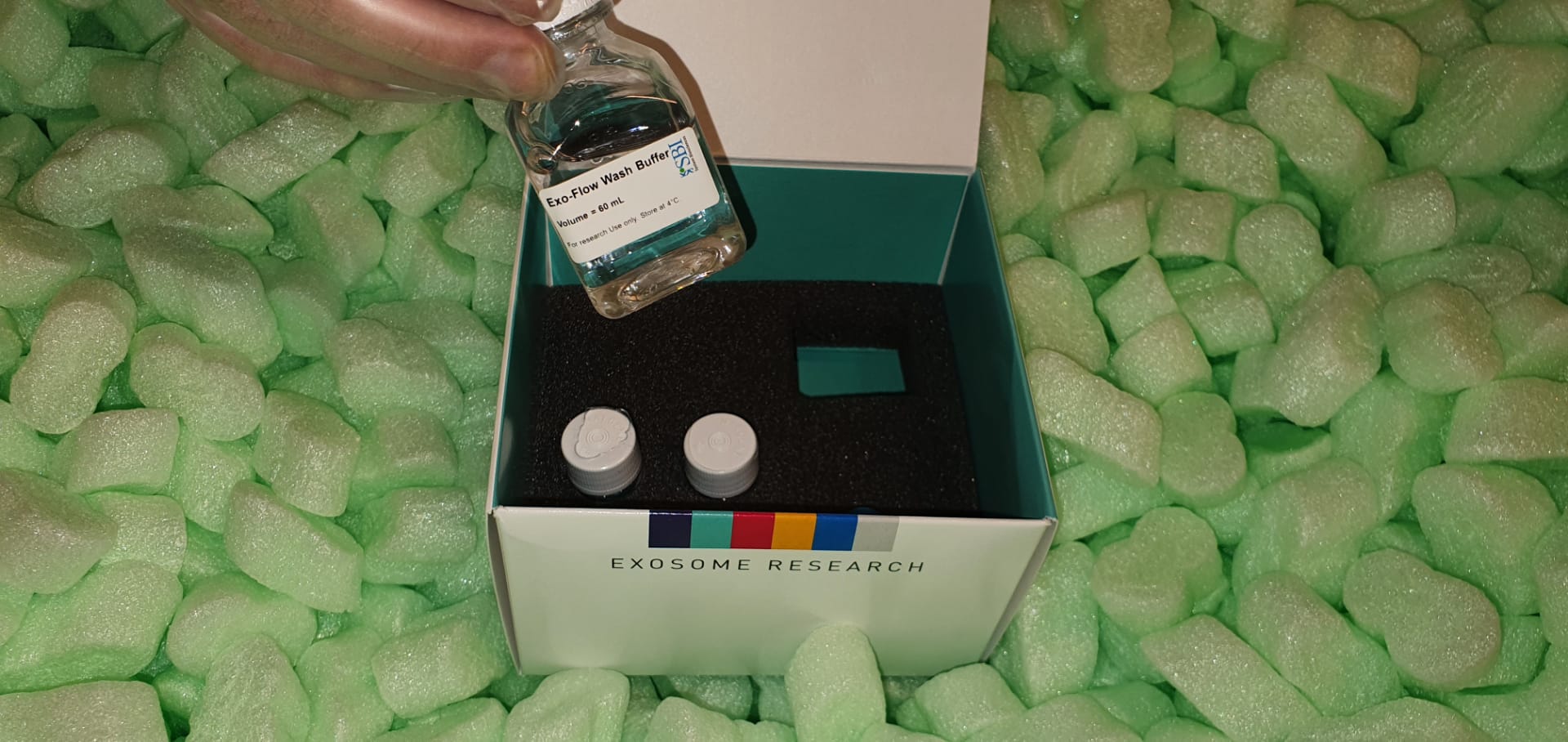
In scientific research, understanding biochemical reactions and cellular activities is essential to uncovering the mechanisms of diseases, drug interactions, and cellular functions. Colorimetric assay kits have become one of the most popular tools for these tasks, allowing researchers to measure the presence, concentration, and activity of specific substances in biological samples. These kits are widely used in fields such as pharmacology, molecular biology, biochemistry, and clinical diagnostics.
By utilizing color changes as a measurable indicator, Colorimetric Assay Kits provide a reliable and cost-effective means of analyzing biological samples in both research and diagnostic labs. They are particularly useful for detecting small molecules, enzymes, and other bioactive compounds, offering a straightforward approach to measuring complex biochemical processes.
What are Colorimetric Assays?
Colorimetric assays are analytical methods used to detect and quantify the presence of a substance in a sample by observing color changes. These assays rely on a specific chemical reaction that produces a colored compound, which can be measured using a spectrophotometer. The intensity of the color is directly proportional to the concentration of the target substance in the sample.
Colorimetric assays are commonly used in various laboratory applications, such as enzyme activity assays, protein concentration determination, and the analysis of small molecules like glucose, cholesterol, and lipids. The simplicity, speed, and low cost of these assays make them invaluable tools in many research settings.
Applications of Colorimetric Assay Kits
1. Enzyme Activity Assays
Colorimetric assay kits are frequently used to measure the activity of enzymes, providing crucial insights into enzyme kinetics, regulation, and substrate specificity. Enzyme-linked immunosorbent assays (ELISA) are an example of colorimetric assays used to detect specific enzymatic activities. According to research published by the National Institute of General Medical Sciences (NIGMS), enzyme assays are fundamental in understanding cellular processes and disease mechanisms.
2. Protein Concentration Determination
One of the most common uses for colorimetric assays is the quantification of protein concentrations in a sample. Colorimetric protein assays, such as the Bradford assay or BCA assay, are widely used in molecular biology to determine protein levels in various biological samples. For example, the National Institutes of Health (NIH) uses colorimetric assays to quantify proteins in research on gene expression, protein synthesis, and disease pathways.
3. Metabolite and Small Molecule Detection
Colorimetric assays are also valuable in measuring the concentration of small molecules and metabolites. For instance, glucose and cholesterol assays are commonly performed using colorimetric kits to monitor metabolic activity and diagnose conditions like diabetes and hypercholesterolemia. The Centers for Disease Control and Prevention (CDC) utilizes these assays for public health research and diagnostics.
4. Clinical Diagnostics
In clinical diagnostics, colorimetric assays are often employed for the detection of biomarkers in blood, urine, and other body fluids. These assays are used to diagnose a variety of conditions, including infections, cardiovascular diseases, and metabolic disorders. Clinical laboratories frequently rely on colorimetric tests for their simplicity, low cost, and rapid turnaround times. The U.S. Food and Drug Administration (FDA) regulates many of these diagnostic tools to ensure accuracy and safety.
5. Drug Discovery and Toxicology Studies
Colorimetric assays are essential tools in drug discovery and toxicology studies, helping researchers evaluate the effectiveness of potential drugs and their impact on cellular health. Cytotoxicity assays, for example, are used to determine whether a drug is toxic to cells, while cell proliferation assays can evaluate how a drug affects cell growth. The National Institute on Drug Abuse (NIDA) emphasizes the importance of these assays in drug screening and the evaluation of therapeutic efficacy.

Key Features of Colorimetric Assay Kits
-
Ease of Use and Convenience: Colorimetric assays are designed to be easy to use, often requiring minimal training or technical expertise. These kits typically come with ready-to-use reagents and step-by-step instructions, making them ideal for routine testing and high-throughput screening. The simplicity of the protocol also minimizes the chances of errors, as highlighted in guidelines from the National Human Genome Research Institute (NHGRI).
-
Sensitivity and Accuracy: These assays provide accurate and reliable results, making them suitable for both quantitative and qualitative analyses. Colorimetric methods are sensitive enough to detect low concentrations of analytes in complex biological samples, making them ideal for detecting biomarkers, enzymes, or metabolites in low-abundance samples.
-
Wide Application Range: Colorimetric assay kits can be used with a variety of sample types, including cell cultures, tissue extracts, blood, and urine. They are versatile enough for use in fields like pharmacology, molecular biology, biochemistry, and environmental research.
-
Affordable and Cost-Effective: One of the major advantages of colorimetric assays is their affordability compared to other analytical methods such as fluorescence or chemiluminescence. This makes them accessible for routine laboratory testing, particularly in resource-limited settings.
How Colorimetric Assay Kits Work
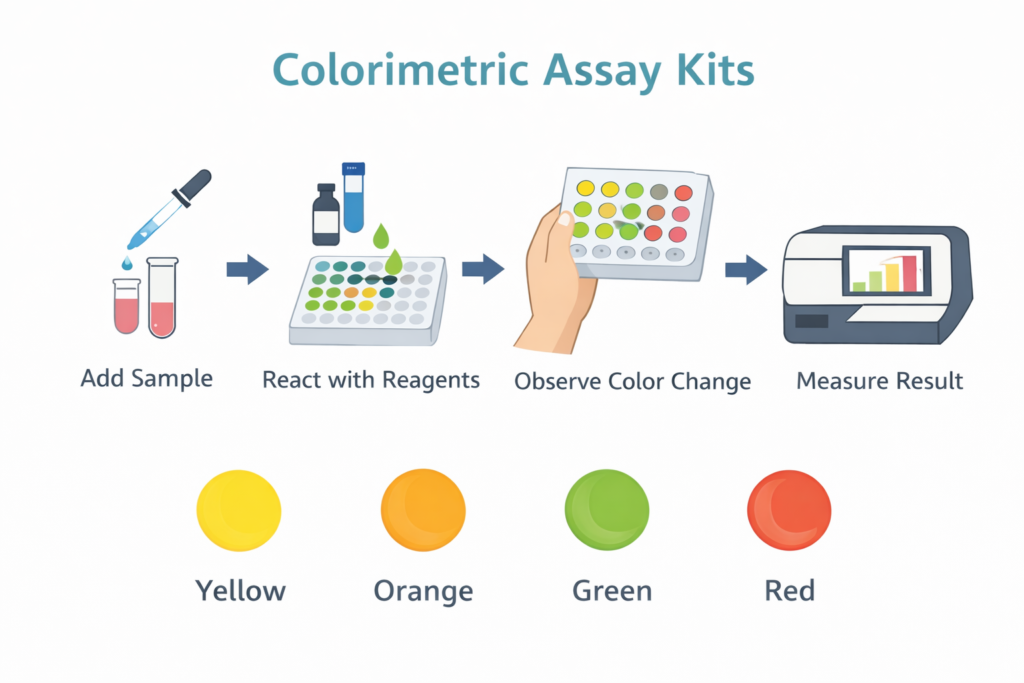
Colorimetric assays typically involve the following steps:
-
Sample Preparation: The sample containing the target substance (such as an enzyme, protein, or small molecule) is prepared and added to a 96-well plate or other suitable format.
-
Reagent Addition: The assay reagent, which contains a substrate that reacts with the target substance, is added to the sample. In some cases, an enzyme-linked reaction is used to amplify the color change.
-
Incubation: The sample is incubated to allow the reaction to take place, resulting in a color change that is proportional to the concentration of the target substance.
-
Measurement: The color intensity is measured using a spectrophotometer, which quantifies the color change at a specific wavelength. The intensity of the color is correlated with the concentration of the substance in the sample.

Why Choose Our Colorimetric Assay Kits?
-
Scientifically Proven: Our colorimetric assay kits are based on the latest research and technology, ensuring high sensitivity, reliability, and reproducibility. As noted in publications from the National Library of Medicine, these assays are validated and widely used in research and clinical laboratories.
-
Optimized for Speed: These kits are designed to provide fast results, making them ideal for high-throughput screening and time-sensitive experiments. Researchers can obtain reliable data in a fraction of the time it would take using more complex methods.
-
Cost-Effective: We offer colorimetric assay kits that provide excellent value for money, making high-quality research accessible to labs with various budgetary constraints.
-
Comprehensive Support: Our expert team is always available to assist with troubleshooting, protocol optimization, and kit selection, ensuring you get the best results for your experiments.
Conclusion
Colorimetric assay kits are essential tools in a wide range of research fields, including enzyme activity analysis, protein quantification, metabolite detection, and clinical diagnostics. Their simplicity, accuracy, and cost-effectiveness make them invaluable for laboratories performing biochemical and molecular analyses. Whether you’re working on drug discovery, disease research, or environmental monitoring, Colorimetric Assay Kits provide a reliable and accessible way to obtain valuable data quickly.
To learn more about our Colorimetric Assay Kits and explore how they can enhance your research, visit our product page today.
-
Colorimetric Assay Kits
-
Enzyme Activity Assays
-
Protein Quantification Kits
-
Cytotoxicity Assays
-
Metabolite Detection
-
Clinical Diagnostics
-
Drug Discovery Assays
-
Biochemical Analysis
-
Small Molecule Detection