Introduction
Accurate diagnostic testing is essential in managing and treating infectious diseases, which can range from common viral infections to more severe conditions such as HIV, Hepatitis, and Tuberculosis. Polymerase Chain Reaction (PCR) testing is a cornerstone of infectious disease diagnostics, offering high sensitivity and specificity for detecting a wide range of pathogens. However, to ensure that PCR tests provide accurate and reproducible results, proper Infectious Disease PCR Quality Control (IST PCR QC) is required.
This article explores the vital role of PCR quality control in infectious disease diagnostics, examining the key components, best practices, and the benefits of quality control for ensuring reliable and accurate PCR-based tests for pathogens. The article will also discuss the significance of IST PCR QC for clinical laboratories, researchers, and healthcare providers.
What is PCR and Why is It Essential for Infectious Disease Diagnosis?
Polymerase Chain Reaction (PCR) is a molecular technique used to amplify and detect small amounts of DNA or RNA from pathogens in clinical samples. PCR is essential for diagnosing infectious diseases because of its high sensitivity and specificity, allowing for the detection of pathogens even in low concentrations. PCR enables the rapid identification of viruses, bacteria, fungi, and parasites, including:
-
HIV (Human Immunodeficiency Virus) – CDC – HIV Testing
-
Hepatitis B and C – CDC – Hepatitis Testing
-
Mycobacterium tuberculosis (Tuberculosis) – WHO – Tuberculosis Diagnostics
-
COVID-19 (SARS-CoV-2) – CDC – COVID-19 Testing Overview
PCR-based tests have become the “gold standard” for infectious disease diagnosis, especially in cases where pathogens are present in low quantities or are difficult to culture. For example, PCR testing for HIV helps in early detection and monitoring of viral loads in patients undergoing antiretroviral therapy. Similarly, PCR tests for tuberculosis can detect the presence of Mycobacterium tuberculosis and its drug resistance patterns.
For PCR to be effective, quality control measures are crucial. Quality control ensures that PCR tests yield reliable and reproducible results, minimizing errors that could lead to misdiagnoses or delays in treatment.
The Importance of IST PCR Quality Control in Infectious Disease Diagnostics
IST PCR Quality Control is a systematic approach to ensure that the PCR process remains accurate, reproducible, and free from contamination or errors. Quality control measures are integrated throughout the testing process, from sample collection and preparation to amplification and result interpretation.
The importance of PCR quality control in infectious disease diagnostics includes the following:
1. Preventing Contamination
Cross-contamination is a significant concern in PCR testing. Even minute amounts of contaminant DNA or RNA from other samples can lead to false positives, resulting in incorrect diagnoses. Negative controls and contamination detection kits are essential to verify that the test is free from contamination.
2. Verifying Test Performance
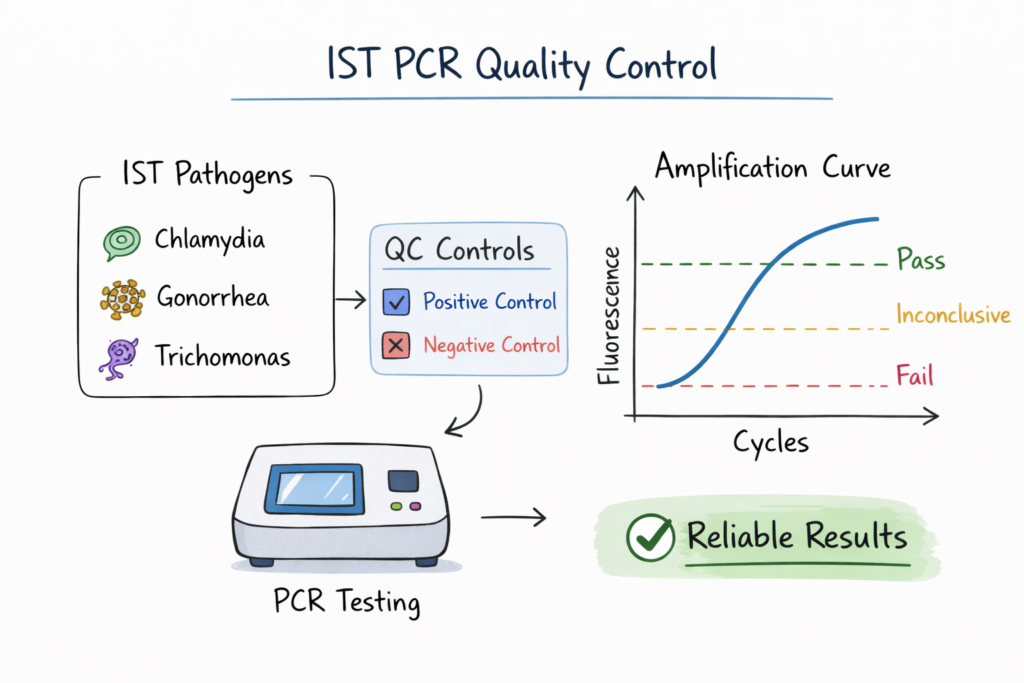
The PCR reaction must function properly for accurate results. If primers, probes, or reagents fail, the PCR will not amplify the target DNA or RNA as expected. Positive controls ensure that the PCR test is working as intended by introducing a known quantity of target DNA, while internal controls verify the integrity of the PCR process and confirm the reaction is working correctly.
3. Reducing False Negatives and False Positives
False negatives (where the test fails to detect the pathogen) and false positives (where the test incorrectly identifies the pathogen) can have serious consequences in managing infectious diseases. Effective PCR quality control measures, including extraction controls and amplification controls, help minimize the risks of these errors.
4. Compliance with Regulatory Standards
PCR testing for infectious diseases must comply with stringent regulatory standards set by health agencies such as the FDA and EMA. These agencies require that clinical laboratories adhere to quality control protocols to ensure that diagnostic tests are both reliable and reproducible. Compliance with these regulations is essential for maintaining laboratory accreditation and delivering trustworthy results.
Key Components of IST PCR Quality Control for Infectious Diseases
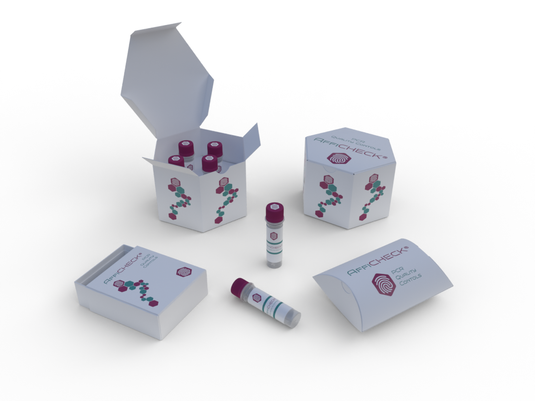
To ensure the reliability and reproducibility of PCR tests, laboratories must incorporate various key components of quality control throughout the testing process.
1. Internal Control Templates
Internal control templates serve as a reference for verifying that the PCR reaction has been successfully performed. These templates contain sequences of DNA or RNA that are amplified during the PCR process, ensuring that the reaction has worked properly. If amplification of the internal control fails, it signals that there is a problem with the PCR reaction.
2. Positive and Negative Controls
Positive controls contain known quantities of the target pathogen’s DNA or RNA. These controls confirm that the PCR reaction is working correctly and that the pathogen can be detected. Negative controls are used to detect any contamination in the PCR process. Together, these controls ensure that the test is functioning correctly and that contamination has not compromised the results.
3. Extraction Controls
The process of extracting DNA or RNA from a sample is critical to the success of PCR. Extraction controls ensure that the sample has been properly processed and that sufficient DNA or RNA has been extracted for the PCR reaction. These controls also help identify any issues with the sample, such as degradation or insufficient quantity of genetic material.
4. Amplification Controls
Amplification controls monitor the PCR amplification process itself. They confirm that the PCR reaction is occurring under optimal conditions and that there are no inhibitors that might affect amplification. Amplification controls help detect any failure in the PCR process before they lead to erroneous results.
Best Practices for IST PCR Quality Control for Infectious Diseases
To maximize the effectiveness of IST PCR Quality Control, laboratories should follow best practices that ensure accurate, reproducible, and compliant PCR testing. Here are several essential recommendations:
1. Use High-Quality Reagents
Reagents such as primers, probes, and buffers must meet high-quality standards to ensure that the PCR reaction is effective. Low-quality reagents can lead to poor amplification, which results in unreliable test results. Laboratories should source their reagents from reputable suppliers and ensure they meet all necessary specifications.
2. Regular Calibration and Maintenance of PCR Equipment
PCR equipment, including thermocyclers and pipettes, must be regularly calibrated to ensure they are functioning correctly. Regular maintenance prevents technical failures, such as inconsistent temperature cycling or improper reagent handling, which could compromise the PCR reaction.
3. Participate in External Proficiency Testing
External proficiency testing programs help assess the performance of PCR tests across multiple laboratories. By participating in these programs, laboratories can compare their results with others and ensure they maintain high diagnostic standards. External testing provides an additional layer of assurance that the laboratory’s PCR tests are accurate and reliable.
Benefits of Implementing IST PCR Quality Control for Infectious Disease Diagnostics
The implementation of IST PCR Quality Control brings several advantages to laboratories and healthcare providers, helping to ensure accurate, timely, and cost-effective diagnostics.
1. Increased Diagnostic Accuracy
By reducing the risk of contamination, improving reagent quality, and verifying test performance, quality control enhances the overall accuracy of PCR tests. This ensures that patients receive the correct diagnosis and appropriate treatment.
2. Cost Savings
Accurate PCR testing reduces the need for repeated tests and prevents the costs associated with diagnostic errors. Moreover, accurate early detection of infections can lead to more timely treatments, preventing complications and reducing overall healthcare costs.
3. Compliance with Regulatory and Accreditation Standards
Compliance with FDA and CDC guidelines ensures that PCR tests meet established standards for accuracy and reliability. Meeting these standards is critical for laboratory accreditation and maintaining public trust in the diagnostic results provided.
Conclusion: The Importance of IST PCR Quality Control for Patient Care
Infectious diseases continue to pose a significant global health challenge, with accurate diagnosis being the key to timely treatment and better patient outcomes. IST PCR Quality Control plays an indispensable role in ensuring that PCR tests for infectious diseases remain reliable, accurate, and compliant with regulatory standards. By incorporating rigorous quality control measures, laboratories can provide healthcare providers with the confidence they need to make informed decisions about patient care.
Ensuring the integrity of PCR tests through effective quality control systems will continue to be a critical component of diagnostics, not only in the fight against infectious diseases but also in improving overall public health outcomes.
-
Infectious Disease PCR Quality Control
-
PCR for infectious disease diagnostics
-
PCR test accuracy for HIV, Hepatitis, Tuberculosis
-
PCR quality control protocols
-
Regulatory standards for PCR diagnostics
-
SARS-CoV-2 PCR testing
References:
-
Centers for Disease Control and Prevention (CDC). (2021). HIV Testing Overview. Retrieved from CDC.gov
-
World Health Organization (WHO). (2021). Tuberculosis Diagnostics and PCR. Retrieved from WHO.int
-
FDA Guidelines for PCR Testing in Diagnostic Laboratories. (2020). Retrieved from FDA.gov
-
PCR Testing for Infectious Diseases. (2019). Journal of Clinical Microbiology, 57(6), 42-46.