
The MTT Cell Proliferation Assay is one of the most established and widely cited cell-based colorimetric assays used in biological research laboratories worldwide. For decades, it has served as a reliable tool for evaluating cell viability, proliferation trends, and cytotoxic effects in cultured cells. Its continued relevance lies in its simplicity, reproducibility, affordability, and compatibility with standard laboratory equipment, making it a cornerstone technique in academic, pharmaceutical, and translational research settings.
This article provides a comprehensive educational overview of the MTT assay—from its biochemical principles and experimental design to data interpretation, limitations, and best practices—while contextualizing its role in modern cell biology workflows.

Scientific background of the MTT assay
The MTT assay was first described by Mosmann in 1983 and rapidly became a standard method for quantifying viable cells in culture
https://pubmed.ncbi.nlm.nih.gov/6606682/
At its core, the assay relies on the ability of metabolically active cells to reduce MTT (3-(4,5-dimethylthiazol-2-yl)-2,5-diphenyltetrazolium bromide), a yellow tetrazolium salt, into insoluble purple formazan crystals. This reduction occurs primarily through mitochondrial dehydrogenase enzymes, which are active only in living cells
https://www.ncbi.nlm.nih.gov/books/NBK144065/
The quantity of formazan produced is proportional to the overall metabolic activity of the cell population, which generally correlates with viable cell number under controlled experimental conditions
https://assayguidancemanual.nih.gov/
What the MTT assay measures
Measures:
-
Cellular metabolic activity
-
Viability of cultured cells
-
Relative proliferation trends
-
Cytotoxic responses to treatments
Does not directly measure:
-
Absolute cell number
-
Cell death mechanism (apoptosis vs necrosis)
-
Cell cycle phase distribution
This distinction is critical and is emphasized in multiple academic method reviews
https://www.ncbi.nlm.nih.gov/pmc/articles/PMC5482403/
https://www.ncbi.nlm.nih.gov/pmc/articles/PMC7096783/
Why the MTT assay remains widely used
Despite the development of fluorescent and luminescent alternatives, MTT remains highly popular because it is:
-
Technically straightforward
-
Compatible with standard 96-well and 384-well plates
-
Cost-effective for high-sample throughput
-
Supported by extensive historical literature
-
Easily comparable across studies and laboratories
These advantages are frequently highlighted in NIH-supported assay evaluation guidelines
https://www.ncbi.nlm.nih.gov/books/NBK53196/

Core biochemical mechanism
Living cells convert MTT into formazan via NAD(P)H-dependent oxidoreductase enzymes
https://www.ncbi.nlm.nih.gov/pmc/articles/PMC4441189/
Dead or metabolically inactive cells cannot perform this reduction, resulting in minimal signal contribution. After incubation, the insoluble formazan crystals are dissolved using organic solvents such as DMSO or acidified alcohol, producing a homogenous colored solution suitable for spectrophotometric analysis
https://www.ncbi.nlm.nih.gov/pmc/articles/PMC5482403/
Typical laboratory workflow
Cell seeding
Cells are plated at densities optimized to remain within the assay’s linear range
https://www.ncbi.nlm.nih.gov/pmc/articles/PMC7096783/
Treatment application
Cells are exposed to compounds, environmental conditions, or genetic perturbations
MTT incubation
MTT reagent is added and incubated (usually 1–4 hours) to allow formazan formation
https://www.ncbi.nlm.nih.gov/pmc/articles/PMC5482403/
Solubilization
Formazan crystals are dissolved completely to ensure accurate absorbance readings
Absorbance measurement
Typically measured at 570 nm, sometimes with a reference wavelength
https://www.ncbi.nlm.nih.gov/books/NBK144065/
Experimental design considerations
Controls
-
Blank wells (media + MTT)
-
Vehicle controls
-
Untreated cell controls
-
Optional positive cytotoxic controls
Replication
-
Minimum of three technical replicates
-
Biological replicates strongly recommended
https://www.ncbi.nlm.nih.gov/pmc/articles/PMC4441189/
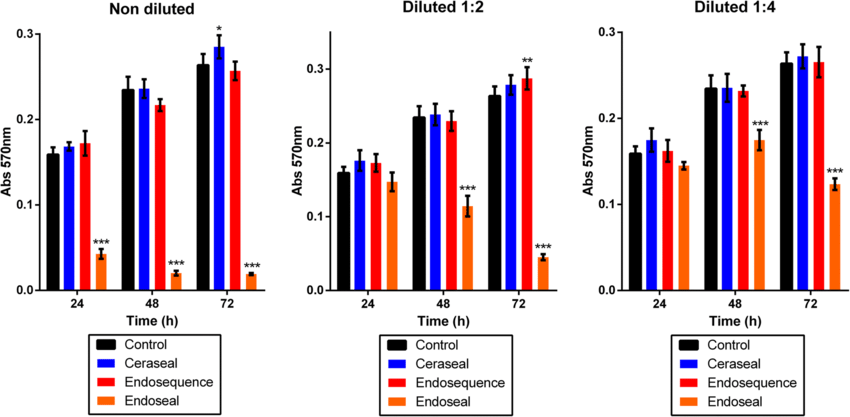
Data processing and interpretation
Raw absorbance values are first corrected by subtracting background signal. Results are then normalized to control wells to calculate relative viability (%)
https://www.ncbi.nlm.nih.gov/pmc/articles/PMC7096783/
Dose-response curves can be generated using nonlinear regression models to estimate inhibitory concentration values when relevant
https://www.ncbi.nlm.nih.gov/pmc/articles/PMC6119723/
Major laboratory applications
Cytotoxicity and compound screening
MTT is extensively used in drug discovery pipelines for early-stage cytotoxicity evaluation
https://www.ncbi.nlm.nih.gov/books/NBK53196/
Proliferation trend analysis
Time-course experiments allow monitoring of growth inhibition or recovery
https://www.ncbi.nlm.nih.gov/pmc/articles/PMC5482403/
Optimization of culture conditions
Used to evaluate serum levels, transfection reagents, or stress conditions
https://www.ncbi.nlm.nih.gov/pmc/articles/PMC4441189/
Limitations and known interferences
Metabolic modulation
Changes in mitochondrial activity may occur without changes in cell number
https://www.ncbi.nlm.nih.gov/pmc/articles/PMC7096783/
Chemical interference
Colored compounds or redox-active molecules may interfere with absorbance
https://www.ncbi.nlm.nih.gov/pmc/articles/PMC6119723/
Incomplete solubilization
Residual crystals can introduce significant variability
https://www.ncbi.nlm.nih.gov/pmc/articles/PMC5482403/
Because of these factors, many research guidelines recommend pairing MTT with orthogonal assays when mechanistic clarity is required
https://www.ncbi.nlm.nih.gov/books/NBK53196/
Comparison with other tetrazolium-based assays
MTT is often compared to assays such as XTT, MTS, and WST-1. While newer assays offer water-soluble products, MTT remains advantageous due to its strong signal stability and historical validation
https://www.ncbi.nlm.nih.gov/pmc/articles/PMC4441189/
Best practices for reproducible results
-
Maintain consistent seeding densities
-
Avoid edge effects in plates
-
Standardize incubation times
-
Validate linear range for each cell type
-
Document solvent compatibility
https://assayguidancemanual.nih.gov/
Introducing the MTT Cell Proliferation Assay (product)
The MTT Cell Proliferation Assay is designed for routine and research-grade evaluation of cell viability and metabolic activity in cultured cells. It supports:
-
Cell proliferation studies
-
Cytotoxicity and compound screening
-
Optimization of cell culture conditions
-
Comparative treatment analysis
Its compatibility with standard laboratory equipment and established protocols makes it a practical choice for research environments seeking consistent, interpretable, and literature-aligned results.
Selected academic and government references
-
NIH Assay Guidance Manual
https://assayguidancemanual.nih.gov/ -
NCBI Bookshelf: Cell Viability Assays
https://www.ncbi.nlm.nih.gov/books/NBK144065/ -
PubMed: Original MTT methodology
https://pubmed.ncbi.nlm.nih.gov/6606682/ -
NIH Cytotoxicity Screening Guidance
https://www.ncbi.nlm.nih.gov/books/NBK53196/ -
NCBI Review on Tetrazolium Assays
https://www.ncbi.nlm.nih.gov/pmc/articles/PMC4441189/