Introduction
Accurate diagnostic tests are the cornerstone of effective healthcare, particularly in the realm of gastrointestinal (GI) diseases. From inflammatory bowel disease (IBD) to infectious gastroenteritis, accurate and timely diagnosis is essential for determining the appropriate course of treatment. Polymerase Chain Reaction (PCR) is widely recognized as one of the most powerful and reliable diagnostic tools for identifying gastrointestinal pathogens.
Gastrointestinal (GI) Disease PCR Quality Control is integral to ensuring that PCR tests deliver accurate, reproducible, and reliable results. It prevents the potential for diagnostic errors that can arise due to contamination, human error, or reagent failure. This article delves into the importance of PCR quality control in gastrointestinal disease diagnostics, exploring the core components, best practices, and benefits of robust quality control systems.

What is PCR and How Does It Apply to Gastrointestinal Disease Detection?
Polymerase Chain Reaction (PCR) is a molecular biology technique used to amplify small segments of DNA or RNA, making them easier to detect and analyze. PCR’s ability to amplify minuscule amounts of pathogen DNA or RNA makes it a highly sensitive and accurate method for diagnosing gastrointestinal diseases.
The PCR technique is particularly valuable in detecting pathogens that may be present in low quantities, or those that are difficult to culture in a lab. For example, Helicobacter pylori is a bacterium that can lead to ulcers and stomach cancer, but it is difficult to detect using traditional methods. PCR can amplify its genetic material, allowing clinicians to detect even trace amounts of the pathogen in gastric biopsies or stool samples – CDC – Helicobacter Pylori Information.
In addition to bacterial pathogens, PCR can be used to detect viruses (e.g., Norovirus), parasites (e.g., Giardia lamblia), and even fungi, which are common culprits in gastrointestinal infections. This makes PCR a versatile diagnostic tool in managing a wide variety of gastrointestinal diseases.
The Critical Role of PCR Quality Control in Gastrointestinal Disease Diagnostics
For PCR to remain effective, accurate, and reliable, quality control measures must be integrated at every stage of the testing process. PCR Quality Control in gastrointestinal disease diagnostics serves several essential functions, including the detection of cross-contamination, the validation of test reagents, and the verification of sample integrity.
Here are some key reasons why Gastrointestinal Disease PCR Quality Control is so vital:
1. Ensuring Test Accuracy
PCR relies on amplifying genetic material to detect pathogens, but it is sensitive to errors at every stage. From improper sample collection to reagent contamination, minor mistakes can lead to incorrect diagnoses. Quality control ensures that every component of the PCR process—primers, reagents, and instruments—works as intended, leading to more accurate results.
2. Preventing Cross-Contamination
Contamination between samples is one of the primary concerns in PCR testing. Even a small amount of DNA from a foreign source can lead to a false positive, misinterpreting results as indicating the presence of a pathogen when in reality there is none. Quality control reagents like negative controls are crucial in preventing and detecting such cross-contamination.
3. Minimizing Human Error
Human error is an inevitable part of laboratory work, but effective quality control protocols can catch mistakes early on. Whether it’s mislabeling samples or incorrect reagent preparation, quality control checks help ensure that these errors do not affect the final results.
4. Compliance with Regulatory Standards
Regulatory bodies like the FDA and EMA have strict guidelines for diagnostic testing, especially when dealing with infectious diseases. PCR tests for gastrointestinal pathogens must adhere to these standards to ensure the validity and reliability of the results. Quality control helps laboratories stay compliant with regulatory requirements, providing peace of mind that their tests meet high standards.
Key Components of Gastrointestinal Disease PCR Quality Control
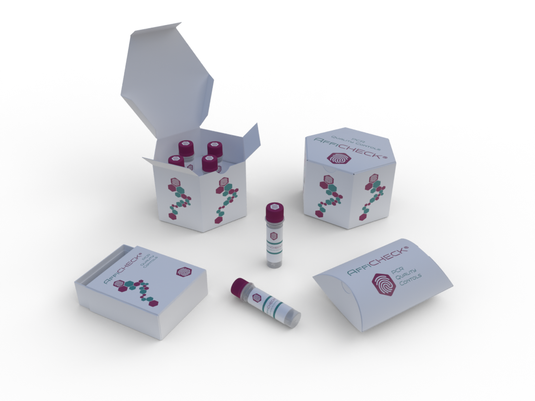
Several key components contribute to an effective PCR quality control system, ensuring the accuracy and reliability of test results.
1. Internal Control Templates
Internal controls are essential in confirming the integrity of the PCR test. These controls contain known sequences of DNA or RNA that act as a marker to verify that the PCR amplification process was successful. If the internal control fails to amplify, it signals a problem with the reaction, such as faulty reagents or equipment malfunction.
2. Positive and Negative Controls
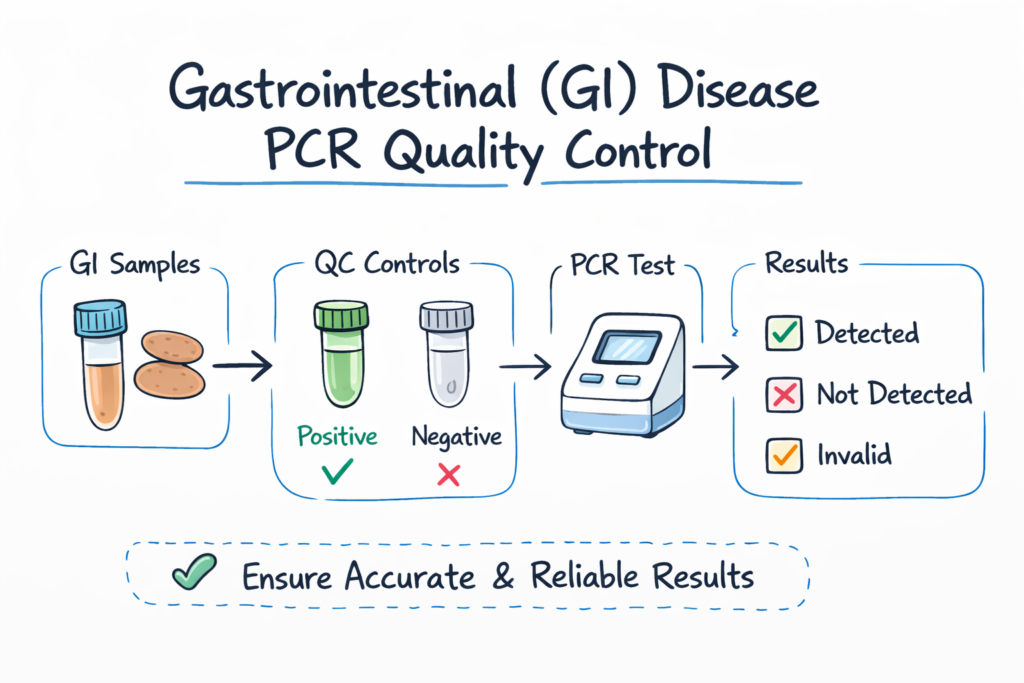
Positive controls contain a known amount of pathogen DNA or RNA to confirm that the PCR test is working correctly. Negative controls, on the other hand, contain no target DNA and are used to detect any potential contamination in the reagents or equipment. These controls help confirm that any positive result is truly indicative of the presence of the pathogen.
3. Extraction Controls
PCR relies on the extraction of genetic material from a sample, whether it’s blood, stool, or biopsy tissue. Extraction controls are used to ensure that this process is carried out effectively and that sufficient DNA or RNA is present for amplification. Without proper extraction, even the most well-optimized PCR assays may fail to detect pathogens.
4. Amplification Controls
Amplification controls are used to monitor the PCR amplification process itself. They ensure that the amplification process occurs under optimal conditions and can detect any inhibitors in the sample that might prevent DNA amplification.
Best Practices for PCR Quality Control in Gastrointestinal Disease Diagnostics
Incorporating best practices into PCR testing protocols ensures the highest possible accuracy and minimizes errors that may affect diagnostic results. Here are some recommended best practices:
1. Use High-Quality Reagents
Using high-quality reagents and consumables is crucial for achieving reliable PCR results. Low-quality reagents may lead to poor amplification or degraded test performance. Laboratories should ensure that they source reagents from reputable suppliers with rigorous quality control processes.
2. Regular Calibration and Maintenance of Equipment
Laboratory equipment such as thermocyclers and pipettes must be regularly calibrated to ensure that the PCR tests are performed accurately. Regular maintenance and calibration minimize the risk of errors caused by malfunctioning equipment, helping to ensure the validity of test results.
3. Participation in External Proficiency Testing
External proficiency testing programs provide laboratories with an opportunity to assess their PCR performance by testing blind samples provided by an independent organization. Regular participation in these programs ensures that laboratories maintain a high level of diagnostic accuracy.
Benefits of Implementing PCR Quality Control for Gastrointestinal Disease Diagnostics
Investing in PCR quality control for gastrointestinal disease testing offers several advantages for both healthcare providers and diagnostic laboratories.
1. Improved Diagnostic Accuracy
With effective quality control measures in place, PCR tests for gastrointestinal diseases yield accurate and reproducible results, reducing the likelihood of false positives and negatives. This leads to more confident diagnoses and improved patient outcomes.
2. Cost Savings
By reducing the need for repeat tests and preventing diagnostic errors, quality control helps laboratories save money. Additionally, accurate diagnostics ensure that patients receive timely treatment, reducing the need for prolonged hospital stays and expensive treatments.
3. Regulatory Compliance and Quality Assurance
Quality control ensures that laboratories meet the necessary FDA and CDC guidelines for diagnostic testing. This is critical for maintaining accreditation and ensuring that tests are legally compliant.
Conclusion: The Importance of Gastrointestinal Disease PCR Quality Control for Patient Care
As gastrointestinal diseases remain a leading cause of morbidity and mortality worldwide, it is vital for healthcare professionals and diagnostic laboratories to rely on accurate and reliable testing methods. Gastrointestinal Disease PCR Quality Control plays a fundamental role in ensuring the reliability of PCR tests, helping clinicians diagnose a wide range of gastrointestinal infections and conditions with confidence.
By investing in quality control systems and adhering to best practices, laboratories can ensure that their PCR tests are accurate, reproducible, and compliant with regulatory standards. Ultimately, this leads to better patient care, faster treatment initiation, and reduced healthcare costs.
-
Gastrointestinal Disease PCR Quality Control
-
PCR for gastrointestinal diagnostics
-
GI pathogen detection PCR
-
PCR testing for C. difficile and H. pylori
-
Norovirus PCR detection
-
PCR reagents for gastrointestinal pathogens
-
Regulatory standards for PCR diagnostics
References:
-
Centers for Disease Control and Prevention (CDC). (2021). Helicobacter pylori Infection. Retrieved from CDC.gov
-
National Institutes of Health (NIH). (2021). Gastrointestinal Pathogens and PCR Testing. Retrieved from NIH.gov
-
FDA Guidelines for PCR Testing in Diagnostic Laboratories. (2020). Retrieved from FDA.gov
-
PCR Testing for Gastrointestinal Infections. (2019). Journal of Clinical Microbiology, 57(6), 42-46.